English 1 Unit 1 Term 1 Week 1, 2025
Instrucciones:
• Los bloques sombreados en color gris se pueden ocultar en la impresión final.
• Para ello haga clic sobre cada uno de los bloques que desea ocultar.
• Para encenderlo nuevamente, pulse el bloque otra vez.
• Solamente los bloques encendidos serán impresos.
• Pulse el botón «Imprimir» cuando se encuentre listo.
• Para un mayor aprovechamiento del espacio, recomendamos eliminar los márgenes al imprimir.
¿Cómo guardar PDF?

Recomendamos utilizar el navegador Google Chrome.
Si no lo tiene instalado en su dispositivo puede descargarlo aquí.
El diálogo de impresión iniciará en cuanto cierre estas instrucciones.
En el cuadro de diálogo, cambie el destino de la impresión:

En las opciones, seleccione «Guardar como PDF»:

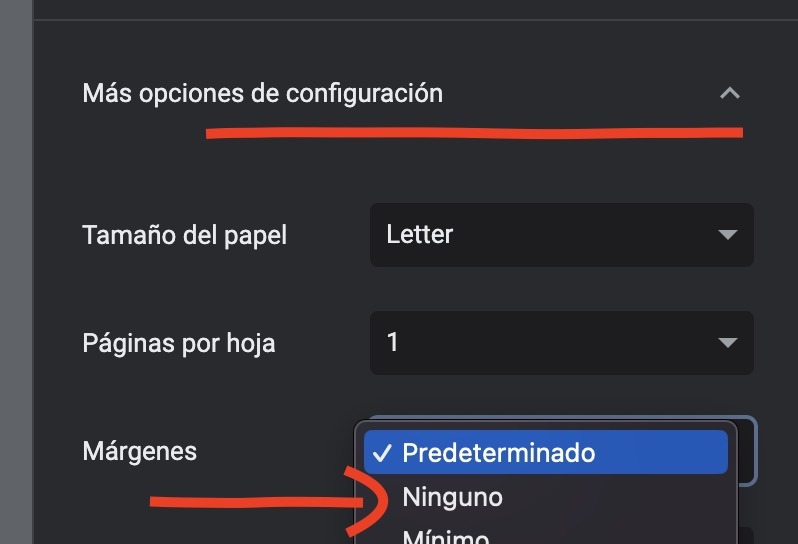
Para aprovechar todo el espacio de su hoja, recomendamos desactivar los márgenes:
Por último pulse el botón «Guardar»:

¿Cómo imprimir en color?
Recomendamos utilizar el navegador Google Chrome.
Si no lo tiene instalado en su dispositivo puede descargarlo aquí.
El diálogo de impresión iniciará en cuanto cierre estas instrucciones.
En el cuadro de diálogo de la impresión siga las siguientes instrucciones:
Si desea imprimir el planeamiento a color, asegúrese de activar la opción «Color»:

En la sección «Más configuraciones»:

Active la opción «Gráficos de fondo»:

Finalmente pulse el botón «Imprimir»:

School year: 2025
Period:
Term: I
Level: First Grade
Unit:1
Week:1
Domain: Socio-interpersonal
Scenario: All about me
Theme: Hi! How are you today?
Enduring Understanding: Our names, the way we look, and the way we feel make us special.
Essential Question: What makes us special?
General Competences: Responsible Citizenship ( X )
Life Competences ( )
Competences for Employability ( )
Learn to Know
Grammar & Sentence Frames
Personal and Possessive pronouns-I, my
- I am Amanda.
- My name is Juan.
Question/Answers with BE
• What is your name? My…
• How are you? Fine.
• How old are you?
Vocabulary
1. Saying Hello! Saying good bye!
Greetings
- Hi! Hello! Good morning, Good afternoon, Good evening, How are you?
Leave-takings
- Good-bye, bye, see you, see you later.
Phonemic Awareness
/m/ /e/ (me, meet; end, egg)
Learn to Do
Function
- Greeting and saying good bye in proper contexts
Discourse Markers
And
Hello and goodbye!
Learn to Be and Live in Community
Psycho-social
Showing self-esteem, self-confidence
Socio-cultural
idioms/ phrases
Hey!
Bye-bye
See ya
Assessment Strategies & Evidences of learning
Learner…
Learner…
Learner…
Learner…
Learner…
Goals
Learner can…
Pedagogical Mediation/ Didactic Sequence
Pre-teaching
Warm up
The teacher greets the students as always.
Students answer as always.
Activation of Prior Knowledge
The teacher asks a student to come to the front.
The teacher greets the student.
The student answers.
The teacher asks another student to come to the front and repeat the action.
Then, the teacher says goodbye while leaving the room.
The students must say any leave taking they know.
Circle Time: The teacher and students sit or stand in a circle.
The teacher starts by greeting a student:
- Teacher: «Hello, [student’s name]! How are you?»
- Student: «Hello, teacher! I’m fine, thank you!»
The student then turns to the next person in the circle and repeats the greeting. This continues until everyone has participated.
After completing the greetings, the teacher pretends to leave and says:
Teacher: «Goodbye, everyone!»
The students must respond with different farewell phrases they know, such as:
- «Goodbye!»
- «See you later!»
- «Bye-bye!»
The game can be repeated with different variations, such as using handshakes, high-fives, or waving while greeting and saying goodbye.
Extra Fun: The teacher can introduce a stuffed animal or puppet to make the activity more engaging for young learners.
Modeling
Students observe pages 8 and 9 in the book.
The teacher reads the vocabulary and the students repeat it.
Clarifying
The teacher explains to students any words they don’t understand if necessary.
Time
L.4. recognizes one or two forms of greetings farewells (Hello, Good-bye) expressions of politeness and personal feelings expressed slowly and clearly.
R.1. Participates in choral reading to identify greetings and leave-takings.
SI.2. Uses one or two forms of greetings and farewells (Hello, Good- bye).
L.4. understand basic greetings, farewells, expressions of politeness and feelings (e.g., hello, good-bye, sorry, pardon?).
R.1. Can repeat key words after the teacher.
SI.2. use one or two learned expressions of greeting, farewell, and politeness (e.g., hello, good-bye, please, you are welcome and thank you).
Oral Comprehension (Listening)
Pre-task
Identification of personal information
The students observe page 12 and listen to the teacher reading the text.
Students complete page 12.
Task rehearsal
The teacher shows the sheet for students to complete.
The teacher explains to the students the different steps when completing the sheet.
Task completion
Students complete the sheet.

Task assessment
Students look at pages 6 and 7 in the book.
Students recognize the word Hello and color the bubble with the word yellow.
Students recognize the word Good bye and color the bubble with the word blue.