English 4 Unit 1 Term 1 Week 4, 2025
Instrucciones:
• Los bloques sombreados en color gris se pueden ocultar en la impresión final.
• Para ello haga clic sobre cada uno de los bloques que desea ocultar.
• Para encenderlo nuevamente, pulse el bloque otra vez.
• Solamente los bloques encendidos serán impresos.
• Pulse el botón «Imprimir» cuando se encuentre listo.
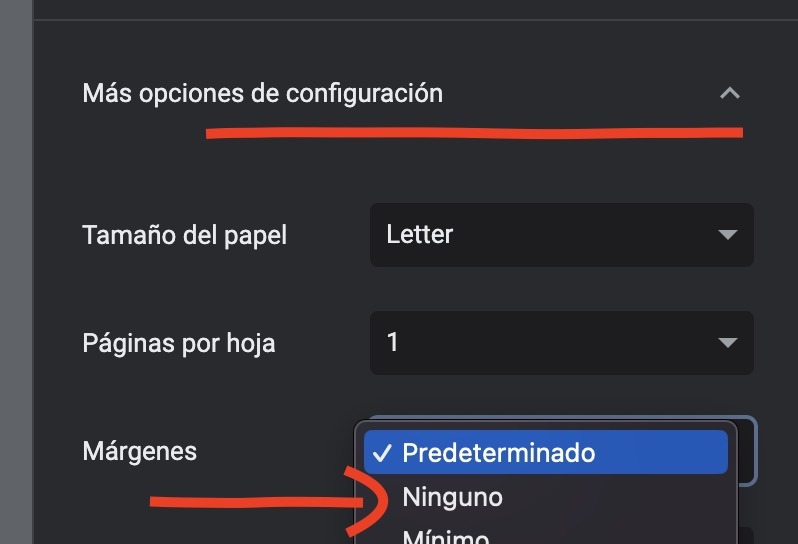
• Para un mayor aprovechamiento del espacio, recomendamos eliminar los márgenes al imprimir.
¿Cómo guardar PDF?

Recomendamos utilizar el navegador Google Chrome.
Si no lo tiene instalado en su dispositivo puede descargarlo aquí.
El diálogo de impresión iniciará en cuanto cierre estas instrucciones.
En el cuadro de diálogo, cambie el destino de la impresión:

En las opciones, seleccione «Guardar como PDF»:

Para aprovechar todo el espacio de su hoja, recomendamos desactivar los márgenes:
Por último pulse el botón «Guardar»:

¿Cómo imprimir en color?
Recomendamos utilizar el navegador Google Chrome.
Si no lo tiene instalado en su dispositivo puede descargarlo aquí.
El diálogo de impresión iniciará en cuanto cierre estas instrucciones.
En el cuadro de diálogo de la impresión siga las siguientes instrucciones:
Si desea imprimir el planeamiento a color, asegúrese de activar la opción «Color»:

En la sección «Más configuraciones»:

Active la opción «Gráficos de fondo»:

Finalmente pulse el botón «Imprimir»:
School year: 2025
Period:
Term: I
Level: Forth Grade
Unit:1
Week: 4
Domain: Socio-interpersonal
Scenario: Weather Wise
Theme: “Walking in the Rain”- Indoor and Outdoor Activities
Enduring Understanding: Depending on the weather, we can decide what we would like to wear, the kind of activities we would like to perform, and the way we feel.
Essential Question: How does weather affect the way we live?
General Competences:
Responsible Citizenship ( X )
Life Competences ( )
Competences for Employability ( )
Learn to Know
Grammar & Sentence Frames
Simple present using (S-V-C) pattern.
- My sister ___ (likes) ____ (winter).
- I feel ___ (happy) when it ____ (rains).
- It is sunny and dry in _____ (January).
Verb tenses (past tense / present progressive and past progressive / past tense)
- Yesterday, _____ (was) a sunny day. He _____ (was wearing) blue jeans and a t-shirt.
- Yesterday, it was snowing, I went skiing
Information questions with past tense
- How was the weather yesterday?
- What were you wearing yesterday?
- Why did you wear a jacket yesterday?
- What did you do last time it rained?
Vocabulary
4.“Walking in the Rain”- Indoor and Outdoor Activities
Outdoor Activities
- Fishing, Running, kayaking, playing soccer, Skateboarding
Indoor Activities:
- playing cards, playing board games, playing video games
Phonemic Awareness
Blending spoken simple onsets and rimes to form real words (onset /c/ and rime / æt/) /- ɜr/.
Examples:
- Hot, got,not, pot
- hat, cat, at, bat.
- hotter, colder, happier.
Learn to Do
Function
- Expressing likes and dislikes.
Discourse Markers
- First, the weather in Costa Rica is beautiful.
- Then, the people are nice.
- After that, the food is delicious.
Finally, the places I visited were wonderful.
Learn to Be and Live in Community
Psycho-social
- Developing skills to work cooperatively.
Sociocultural
- Using different ways of sharing personal experiences and concerns.
Idioms/phrases
Idioms
- Quick, get ready!
- Dressed to kill. (Dressed in fancy, stylish clothing.)
Assessment Strategies & Evidences of learning
Learner…
Goals
Learner can…
Pedagogical Mediation/ Didactic Sequence
Pre- teaching
Warm Up
The teacher asks:
How is the weather today?
Students may answer in different ways.
Activation of Prior Knowledge
The teacher asks a student to come to the front and have a small conversation with her/him.
- Teacher: Hello__________. How are you?
- Student: Fine, thanks, and you?
- Teacher: Fine thanks. How is the weather today?
- Student: It is ___________.
- Teacher: Thanks. Bye, bye.
- Student: Good bye
(Some answers may change a little)
Modeling
The teacher reads the dialogue at the top of page 9 of the book.
Different students role play the dialogue.
Students work with a classmate and fill in page 9.
Students rehearse the vocabulary with their classmate.
Modeling
The teacher reads the dialogue at the top of page 9 of the book.
Different students role play the dialogue.
Students work with a classmate and fill in page 9.
Students rehearse the vocabulary with their classmate.
Time
R.1. Recognizes much of what is written in short, simple texts.
Indicators of learning
Recognizes the main points in a short story
R.1. understand much of what is written in short, simple texts on subjects with which they are familiar and/or in which they are interest
Pre-task
The teacher writes some vocabulary on the board.
Students look for it in the dictionary if they do not know it.
few truth bored tic-tac-toe
but expensive fact
Task – Rehearsal
The teacher shows students the chart they are going to fill in.
She answers to questions if there are any.
Task completion
Students read the letter on page 29 of the book and complete the chart.
Task – Assessment
Students share their answers with a classmate.
Some students write their answers on the board to be checked.
The teacher corrects the answers if needed.
Post task
The teacher asks the students:
Where is this family?
What are they doing?
How is the weather?